
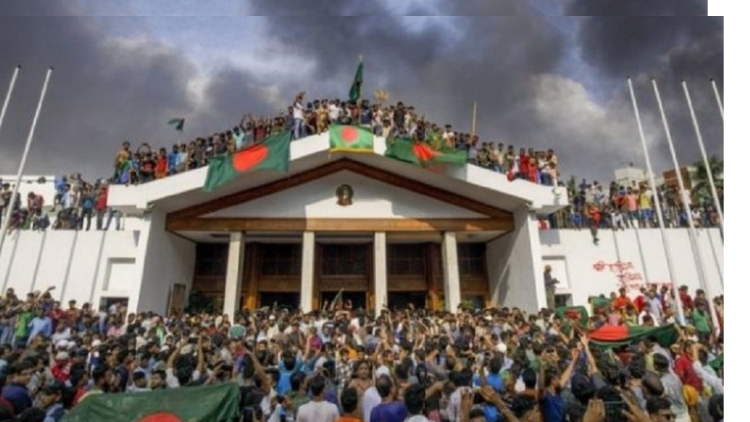
 The major political upheaval in Bangladesh, which led to the ouster of Prime Minister Sheikh Hasina a month earlier, following a student-led protest movement.
After Hasina’s departure, Nobel Peace Prize laureate Muhammad Yunus was sworn in as the head of an interim government.

Yunus and his Cabinet, which includes key protest leaders, have focused on restoring law and order, fighting corruption, and preparing for elections.
The interim government is also working on institutional reforms with the help of the United Nations Development Programme (UNDP).
Despite efforts to stabilize the country, unrest persists. Factory closures have occurred due to garment worker strikes demanding better wages, and tensions remain high over lingering anger toward Hasina’s regime.

The situation has led to a series of politically motivated charges and attacks on those connected with Hasina’s government, sparking concerns of “vigilante justice.”
Many students and citizens are hopeful that the interim government will bring meaningful change, although economic recovery and restoring public trust in institutions remain significant challenges.
There are concerns that Yunus’ support base, especially among the youth, might dwindle if economic issues aren’t addressed soon.
The Bangladesh Nationalist Party (BNP), Hasina’s main opposition, is pushing for quick elections, raising questions about how political stability can be achieved in the long run.